




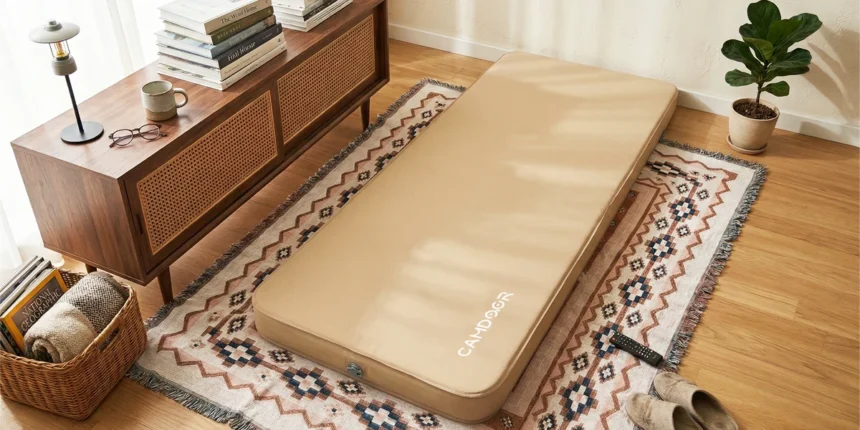
In the dense urban landscapes of Tokyo, Osaka, and Yokohama, a quiet revolution is happening within the four walls of the Japanese apartment. The traditional distinction between “outdoor adventure” and “indoor comfort” is rapidly evaporating. Driven by a unique combination of limited living space, a rising interest in minimalist aesthetics, and a deep-seated cultural focus on disaster resilience, more people are integrating camping equipment into their daily domestic lives.
This “Dual-Use” (or Nitoryu) lifestyle isn’t just about saving money; it’s about a smarter, more flexible way of living. In a country where a spare bedroom is a rare luxury, high-quality キャンプ ギア is stepping in to fill the gap, serving as primary bedding, guest furniture, and life-saving equipment all at once.
The Minimalist Solution to the “Guest Room” Dilemma
One of the most persistent challenges for residents in Japanese cities is the lack of space for guests. Traditional Western-style guest beds are bulky and impossible to store, while even traditional futons require significant closet space (oshiire). This is where modern outdoor engineering provides a sophisticated solution.
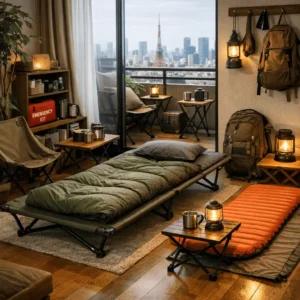
For many, a high-performance キャンプ コット has become the go-to alternative for hosting overnight visitors. Unlike the creaky guest beds of the past, contemporary cots are designed for ergonomic support and can be assembled in seconds.
When the guest departs, the cot folds into a slim profile that can slide behind a wardrobe or under a permanent bed. For the host, it offers a way to provide a comfortable, elevated sleeping surface without sacrificing the precious square footage of a multifunctional living room.
Elevating Daily Sleep: From Floor to Cloud
The transition from camping gear to daily home use isn’t limited to guests. A growing number of Japanese minimalists are choosing to sleep on outdoor equipment every night. The motivation is often “Shin-Seikatsu” (New Life)—the desire to start fresh with only the essentials.
However, sleeping on the floor requires more than just a blanket. To protect the body from the cold and hardness of the floor, an insulated エアマット キャンプ is an absolute necessity. In the forest, these mats protect against jagged rocks and damp earth; in a Tokyo studio, they provide a customizable level of firmness that rivals high-end mattresses.
Because they are designed to be lightweight and portable, they can be rolled up every morning, allowing a single room to serve as an office by day and a bedroom by night. This versatility is the cornerstone of the modern “Tiny House” movement currently gaining traction across the archipelago.
Disaster Preparedness: The “Bousai” Integration
In Japan, the word Bousai (disaster prevention/preparedness) is a fundamental part of the national consciousness. Given the geographical reality of earthquakes and typhoons, Japanese households are encouraged to keep an “emergency kit” ready at all times. The brilliance of the Dual-Use lifestyle is that your daily-use items are your emergency items.
Should a power outage occur during the damp, cold months of a Japanese winter, staying warm becomes the primary concern. In such a scenario, a technical mummy-style sleeping bag is far more effective than standard household duvets.
Camping bags are engineered to trap body heat in extreme conditions and are made from materials that retain their loft even in humid environments. By using a high-quality bag as a “home throw” or guest bedding, a family ensures that their most vital survival tool is always maintained, clean, and ready to be packed if an evacuation order is ever issued.
Aesthetic Harmony: The “Outdoor Living” Interior Trend
Beyond the practicalities of space and safety, there is an undeniable aesthetic appeal to modern camping gear. The current interior design trend in Japan favors “earth tones“, khaki, sand beige, and olive drab, which are the standard colors of high-end outdoor equipment. This allows gear to blend seamlessly into a “Japandi” (Japanese-Scandinavian) style home.
Outdoor chairs and tables are being used as permanent balcony furniture or even as primary dining sets. These pieces bring a sense of “adventure” into the mundane daily routine.
Sipping morning coffee in a lightweight camping chair while looking out over a city skyline provides a psychological “reset” similar to being in the mountains.
This connection to nature, even if purely through the tactile feel of canvas and aluminum, is a powerful antidote to the stress of urban “salaryman” life.
Longevity and Sustainability: Investing in “Pro-Grade” Quality
A common misconception is that camping gear is “temporary” or “cheap.” In reality, the gear used by serious Japanese campers is built to withstand much harsher conditions than a climate-controlled apartment.
When you buy a pro-grade outdoor item for home use, you are investing in a product with a lifespan that often exceeds mass-produced “fast furniture.”
Furthermore, this lifestyle supports a more sustainable consumption model. Instead of buying a cheap sofa that will be discarded during the next move, Japanese dwellers are choosing modular, repairable outdoor gear that moves with them.
This “buy once, buy better” philosophy resonates with the traditional Japanese value of Mottainai (the regret of wasting resources).
How to Successfully Integrate Outdoor Gear into Your Home
If you are looking to transition to a dual-use lifestyle in Japan, consider the following tips for a harmonious integration:
- Prioritize Breathability: Japan’s high humidity means that any gear used indoors must have excellent moisture-wicking properties to prevent mold.
- Focus on Texture: Choose gear with canvas or heavy-duty nylon finishes rather than shiny, “plastic-feel” fabrics to ensure it feels like a part of your home decor.
- Regular Maintenance: Even if gear isn’t going outside, it should be aired out regularly. Inflatable items should be checked for air pressure to ensure long-term durability.
Conclusion: The Future of Urban Living
The rise of camping gear as home essentials in Japan is a testament to the country’s ability to innovate within constraints. By viewing a folding cot as a guest room, an inflatable mat as a primary mattress, and a sleeping bag as a life-saving heat source, the modern Japanese resident is creating a home that is both a sanctuary and a survival pod.
This lifestyle reminds us that “home” is not defined by the weight of our furniture, but by the comfort and security we feel within our space.
As we move toward a more mobile and uncertain future, the lessons from the Japanese campsite, portability, efficiency, and resilience, are becoming the blueprint for the modern home.
Whether you are hosting a friend in a crowded city or preparing for the unexpected, the tools of the trail are proving to be the best companions for life at home.