


Thinking about death unsettles almost everyone. But when those thoughts take over your days, disrupt your sleep, or stop you from enjoying life, you may be dealing with thanatophobia. This intense fear of death and dying affects people of all ages, and it responds well to professional support. This guide explains what the condition is, what drives it, how to recognize it, and which proven strategies help you regain control.
This guide covers symptoms, possible causes, how professionals assess the fear, and therapies likes cognitive behavioural therapy (CBT) can helps.
What Is Thanatophobia?
Clinicians do not list thanatophobia as a separate diagnosis in the DSM-5. Mental health professionals usually assess it as a specific phobia or as part of generalized anxiety disorder, panic disorder, or health anxiety. A qualified therapist can help you identify which pattern fits your experience. It also differs from necrophobia, the fear of dead things such as corpses or graveyards.
The fear can centre on:
- Being dead or no longer existing
- The dying process, including pain or loss of control
- Leaving loved ones behind
- Not knowing what happens after death
Occasional thoughts about mortality are common. The concern grows when the fear is persistent, hard to manage, or disruptive.
Is Fear of Death Normal?
Yes. The Canadian Psychological Association (CPA) says most people worry about death and dying from time to time. It becomes a problem when it gets in the way of living and enjoying life.
Common triggers include a serious diagnosis, bereavement, ageing, parenthood, an accident, upsetting news, or stress. One rough month after a loss does not mean thanatophobia. Persistence, distress, and disruption matter more than the label.
What Are the Symptoms of Thanatophobia?
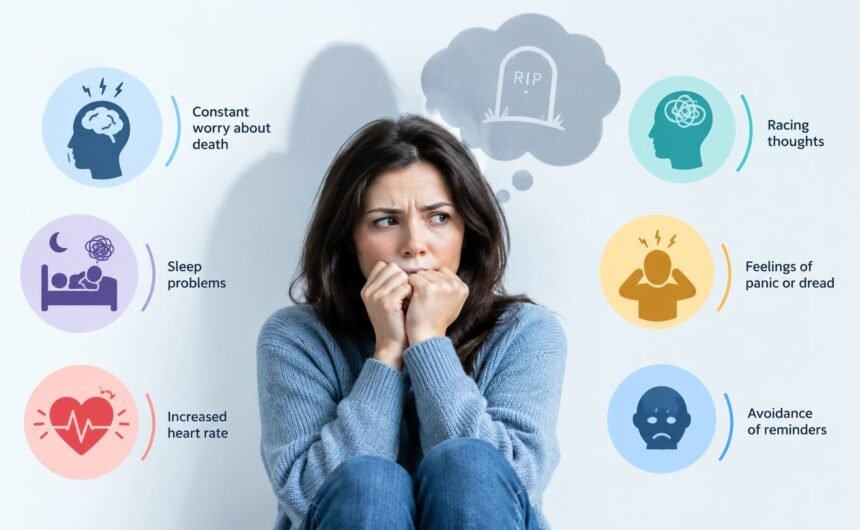
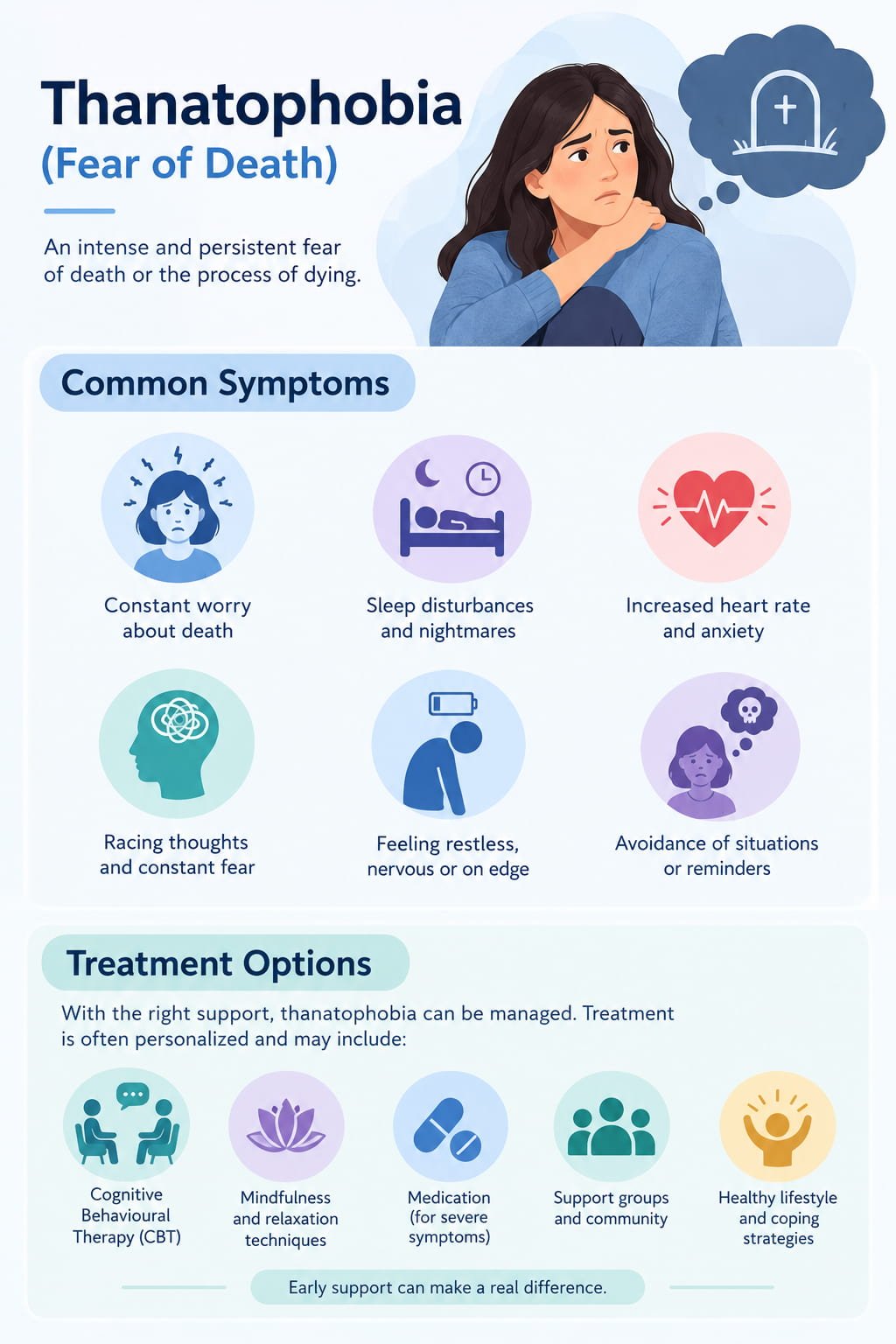
Symptoms fall into three groups. Nobody has all of them, and this list cannot diagnose you.
Emotional and cognitive
- Repeated thoughts about death or dying
- Intense dread when thinking about mortality
- Difficulty tolerating uncertainty
- Imagining worst-case scenarios
Physical
- Racing heartbeat, sweating, or shaking
- Muscle tension or shortness of breath
- Nausea, dizziness, or trouble falling asleep
These sensations are nonspecific and have many causes. New, severe, or unusual symptoms need a medical assessment, not an assumption that anxiety is responsible.
Behavioural
- Avoiding hospitals, funerals, or medical conversations
- Checking the body or searching symptoms online
- Asking family for repeated reassurance
- Avoiding future plans
The CPA lists skipping funerals and avoiding writing a will among behaviours linked to health-related fears.
What Causes Fear of Death?
There is no single cause. The National Institute of Mental Health says genetic and environmental factors both play a role in phobias generally. For death-related fear, possible contributors include:
- Loss or trauma. Bereavement, a frightening medical event, or an accident can make mortality feel immediate. Grief counselling and trauma therapy can address these roots. Most people with these experiences do not develop death anxiety.
- Intolerance of uncertainty. Death offers no guarantees, which is hard for people who need certainty.
- Health anxiety. Worry about bodily sensations can feed fears of dying.
- Panic symptoms. A panic attack can feel like imminent death, which breeds more fear.
- Life changes. Parenthood, ageing, retirement, or illness can raise new questions.
- Existential questions. Concerns about meaning, identity, and nonexistence can cause distress.
These are possibilities, not a checklist that explains any one person’s fear.
Thanatophobia vs Death Anxiety vs Health Anxiety
| Feature | Thanatophobia | Death anxiety | Health anxiety |
|---|---|---|---|
| Main concern | Intense fear of death or dying | Broader distress about mortality | Fear of having or developing a serious illness |
| Typical thought | “I am terrified of dying.” | “I can’t stop thinking about mortality.” | “This symptom might be fatal.” |
| Common triggers | Thoughts of death or nonexistence | Bereavement, life changes, existential questions | Bodily sensations, health news |
| Common behaviours | Avoidance, rumination | Repeated reflection and worry | Body checking, repeated searches |
| Clinical status | Descriptive term, not a standalone diagnosis | Broad psychological concept | May relate to illness anxiety disorder |
These categories overlap. Fear of dying focuses on the process, such as pain or losing control. Health anxiety centres on illness. The CPA notes that health anxiety can stand alone, as illness anxiety disorder, or occur alongside panic disorder, generalized anxiety, or obsessive-compulsive disorder. A clinician assesses your actual symptoms rather than relying on terms.
Why Does Fear of Dying Get Worse at Night?
Daytime distractions fade. The room is quiet, fatigue makes emotions harder to manage, and some people worry about not waking up.
These steps may help:
- Keep a consistent sleep schedule.
- Stop searching symptoms late at night.
- Follow a calming bedtime routine.
- Try a grounding exercise such as the 5-4-3-2-1 technique.
They will not erase intrusive thoughts or treat an underlying anxiety condition. They can reduce distress at bedtime.
How Does It Affect Daily Life?
Persistent fear can disrupt sleep, concentration, relationships, medical appointments, social plans, and future planning. Avoidance and reassurance seeking bring short-term relief, yet they keep the fear active over time. Not everyone who fears death develops these difficulties.
How Is Thanatophobia Assessed?
A mental health professional asks what the fear involves, when it began, how often it occurs, and what triggers it. They also ask about sleep, relationships, avoidance, reassurance seeking, bereavement, trauma, and other anxiety symptoms.
Depending on the picture, they may consider specific phobia, panic disorder, health anxiety, obsessive-compulsive symptoms, generalized anxiety, or trauma-related distress. For a specific phobia, the DSM-5 criteria call for fear and avoidance that typically last six months or more. In Ontario, you do not need a formal diagnosis to see a registered psychotherapist.
How Can You Overcome Thanatophobia?
The goal is less distress, not zero thoughts about death.
- Treat the thought as a thought. A frightening thought is not proof of danger. Notice it, name the emotion, and let it pass. Still get concerning physical symptoms checked.
- Reduce reassurance seeking. Symptom searches, body checks, and repeated questions soothe briefly and strengthen worry. Cut back gradually, without ignoring real health concerns.
- Practise grounding and slow breathing. These are coping tools, not cures.
- Make room for uncertainty. Nobody gets full certainty about death. Chasing it prolongs rumination. Return your attention to what matters today.
- Keep meaningful routines. Relationships, exercise, hobbies, and goals stop fear from steering your decisions.
Self-help alone is not enough for everyone.
What Treatments Help With Thanatophobia?
Treatment depends on severity and any related concerns. NIMH calls psychotherapy the primary treatment for phobias, with CBT as a well-established approach and acceptance and commitment therapy (ACT) as another option.
- Cognitive-behavioural therapy (CBT). It helps people spot unhelpful interpretations, test catastrophic predictions, and reduce avoidance. For health anxiety, the CPA reports that people completing 6 to 20 CBT sessions generally report less fear of illness.
- Exposure-based work. A clinician may plan gradual exposure to feared thoughts or situations. It should be individualized and guided, never abrupt or unsupervised.
- ACT and mindfulness. Acceptance and Commitment Therapy (ACT) teaches people to hold distressing thoughts without letting them dictate actions. Acceptance does not mean approving of death or abandoning your beliefs.
- Grief or trauma-focused support. This fits when the fear ties closely to loss or a traumatic event.
- Medication. It is not automatically required. NIMH says a provider may prescribe medication in specific circumstances after evaluating symptoms. Never start, stop, or adjust medication without a prescriber.
No therapy guarantees the fear disappears. Online therapy across Ontario can make starting easier.
When Should You Seek Mental Health Professional Help?
Consider reaching out for mental health support when:
- The fear is persistent or hard to control
- It regularly disrupts sleep
- Thoughts interfere with work or relationships
- Avoidance limits everyday activities
- Panic symptoms recur
- Grief or trauma feels unmanageable
Start with a family physician, psychologist, or psychotherapist. Seek medical care for severe physical symptoms rather than assuming anxiety is the cause.
If fear of death comes with thoughts of self-harm, or you feel unsafe, call or text 9-8-8 in Canada or 988 in the US. In an emergency, call 911.
Key Takeaway
Thanatophobia is an intense, persistent fear of dying that can disrupt daily life. Some fear of death is part of being human. When it becomes overwhelming, evidence-based support can help you live with it.
Frequently Asked Questions
Is thanatophobia a mental illness?
It is not a standalone diagnosis in the DSM-5. A clinician can assess whether your symptoms fit a recognized anxiety-related condition.
Why am I suddenly afraid of dying?
Bereavement, illness, a frightening experience, stress, or a life change can trigger it.
Can thanatophobia cause panic attacks?
Fear of death can accompany panic attacks, and alarming sensations can heighten it. Recurrent episodes deserve assessment.
How can I stop thinking about death?
Forcing thoughts away rarely works. Grounding, less reassurance seeking, meaningful activity, and therapy can reduce distress.
Can thanatophobia be treated?
Yes. Approaches such as CBT can reduce distress and improve daily functioning, though results vary.