


Cloud servers are hosted and can be accessed by users over a network. Besides, they are planned to provide similar functions, applications, and support the same operating system (OS) while offering performance traits identical to traditional physical Cloud servers are hosted and can be accessed by users over a network. Besides, they are planned to provide similar functions, applications, and support the same operating system (OS) while offering performance traits identical to traditional physical servers. They are also referred to as virtual servers, virtual platforms, or virtual private servers. You may want to choose a competent company that offers the services. Several of them, including Cloud Server India, is an excellent deal for your business.
Types and Features of Cloud Servers
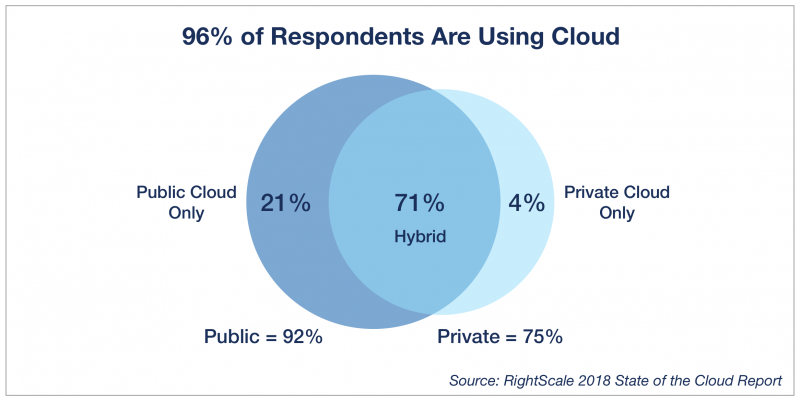
There are various types of cloud servers that an enterprise can choose from. The three main models include; public cloud, private cloud, and dedicated cloud servers. A public cloud server can be described as a virtual machine that is hosted by a public cloud provider delivering to users across the internet with the use of web-based interface.
Private cloud servers are computing instance within an on-premises private cloud. The cloud server is delivered to the in-house users across local area network (LAN). The primary difference between the clouds mentioned above is that a private cloud server is within an organization’s infrastructure; contrary to the public where the server is hosted and operated outside the organization.
Additionally, it is possible for cloud server providers to supply physical cloud servers which dedicate the physical server to the user. The dedicated servers are also referred to as dedicated instances. They are mostly used when a company must lessen the security and performance concern that is often brought about by multi-tenant cloud servers.
How Cloud Server Works?
According to the cloud server providers like HostingRaja Cloud Server India, servers are available in a wide array of compute option, with varying amounts of processors and memory resources. The specifications allow a user to select the best instance type according to the specific workload. For instance, a smaller Amazon EC2 might offer one virtual CPU and two GB of memory, with a more significant Amazon EC2 instance providing 96 virtual CPUs and 384 GB memory. Moreover, it is possible to find server instances that are tailor-made to specific workload requirements. It is not unusual for traditional physical servers to have some storage. On the contrary, most public cloud servers do not include storage resources, but cloud server providers offer storage separately.
Benefits and Drawbacks
The servers to be chosen for use are dependent on the needs of the organization and its precise application and workload requirements. Some of the drawbacks and benefits include:
Easy to use: A good cloud server is supposed to be simple to use and that a user can provision it in a short time. The benefit of using a public cloud server is that an organization does not need to worry about the maintenance, installation, or any other task that comes with the ownership of a physical server.
Globalization: It is understood that public servers can ‘globalize’ workloads. Given the traditionally centralized data center, it is possible for users to globally access workloads. Nonetheless, network latency and interruptions can hinder optimum performance for distant users. However, this problem can be solved by hosting duplicate instances of a workload in a different geographical area, thus benefiting users from those areas.
Cost: The pay-as-you-go model can prove to be beneficial to organizations compared to the traditional physical servers, particularly when running temporary workloads. Cloud servers are only used in temporary use cases or when high scalability is required. However, cloud servers can be more expensive than owning a server depending on the use. Additionally, regulations and corporate governance might disallow organizations from storing data in different geographical areas.
Resilience and Outages: Cloud servers are prone to unexpected outages due to unexpected network disruption or faults within the provider’s environment. In such cases where a user does not have control over the provider’s infrastructure, the organizations to keep the most critical workloads within the local data center instead of using public cloud. Additionally, public clouds have no inherent high availability or redundancy.
Performance: The lack of control over a provider’s physical servers means that a VM might be negatively impacted by excessive storage or network demands of the same hardware. Dedicated servers are best in avoiding such situations. They are also referred to as virtual servers, virtual platforms, or virtual private servers. You may want to choose a competent company that offers the services. Several of them, including Cloud Server India, is an excellent deal for your business.