



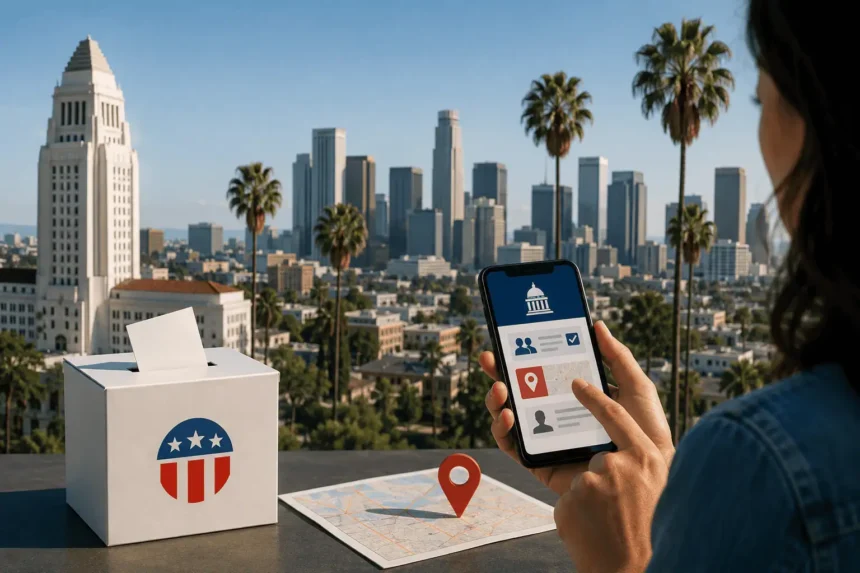
Local elections can be hard to follow. Presidential races get months of headlines, ads, and debate coverage, while local races often receive far less attention. By the time voters see their ballots, they may find unfamiliar names, offices, judges, school board races, and measures.
The shift is practical. Local elections affect housing, schools, public safety, taxes, transportation, courts, and small-business regulations. When voters understand that these choices can shape their daily lives, they are more likely to seek clear information before making a decision.
Voters Want Simple Answers Before Election Day
Local ballots can include many decisions that are not easy to understand at first glance. A voter may need to compare candidates for city council, county offices, school board seats, judgeships, and ballot measures. Many of these races are not covered in depth by national media, so people turn to search engines for fast answers.
Common searches are simple. Who is running? What does this office do? What does this measure change? Where do voters cast a ballot? What is the registration deadline? These questions may seem basic, but they can help decide whether someone feels ready to vote.
For Los Angeles voters sorting through local races and measures, an LA Voter Guide can help make ballot choices easier to review before election day. Strong voter resources explain offices, define ballot language, and help people understand what is actually being decided.
This matters since local offices can affect daily routines. A city council race may influence development, public safety funding, parking, business rules, and neighborhood services. A school board race may shape district spending, staffing, and student support. A county race may affect courts, health programs, homelessness services, and transportation planning.
Online research also fits how people already make decisions. They compare restaurants, doctors, schools, contractors, and products online. Voting is starting to follow the same habit. When the ballot feels unclear, voters look for trusted information that helps them feel prepared.
Search Helps Fill the Local Information Gap
More people are searching online, partly due to gaps in local election coverage. Some communities have fewer local reporters than they once did. Others may cover the biggest races while offering little explanation for smaller contests. That can make down-ballot voting feel harder than it should.
The Pew Research Center has reported that many Americans get at least some local political news, but not all are highly satisfied with the information they receive. This creates demand for voter resources that are easy to read, neutral in tone, and focused on useful details.
Different voters also need different information. A first-time voter may need help with registration, vote-by-mail rules, and polling locations. A parent may care most about school board races. A renter may search for housing measures. A business owner may look for candidates with expertise in taxes, permits, public safety, or commercial districts.
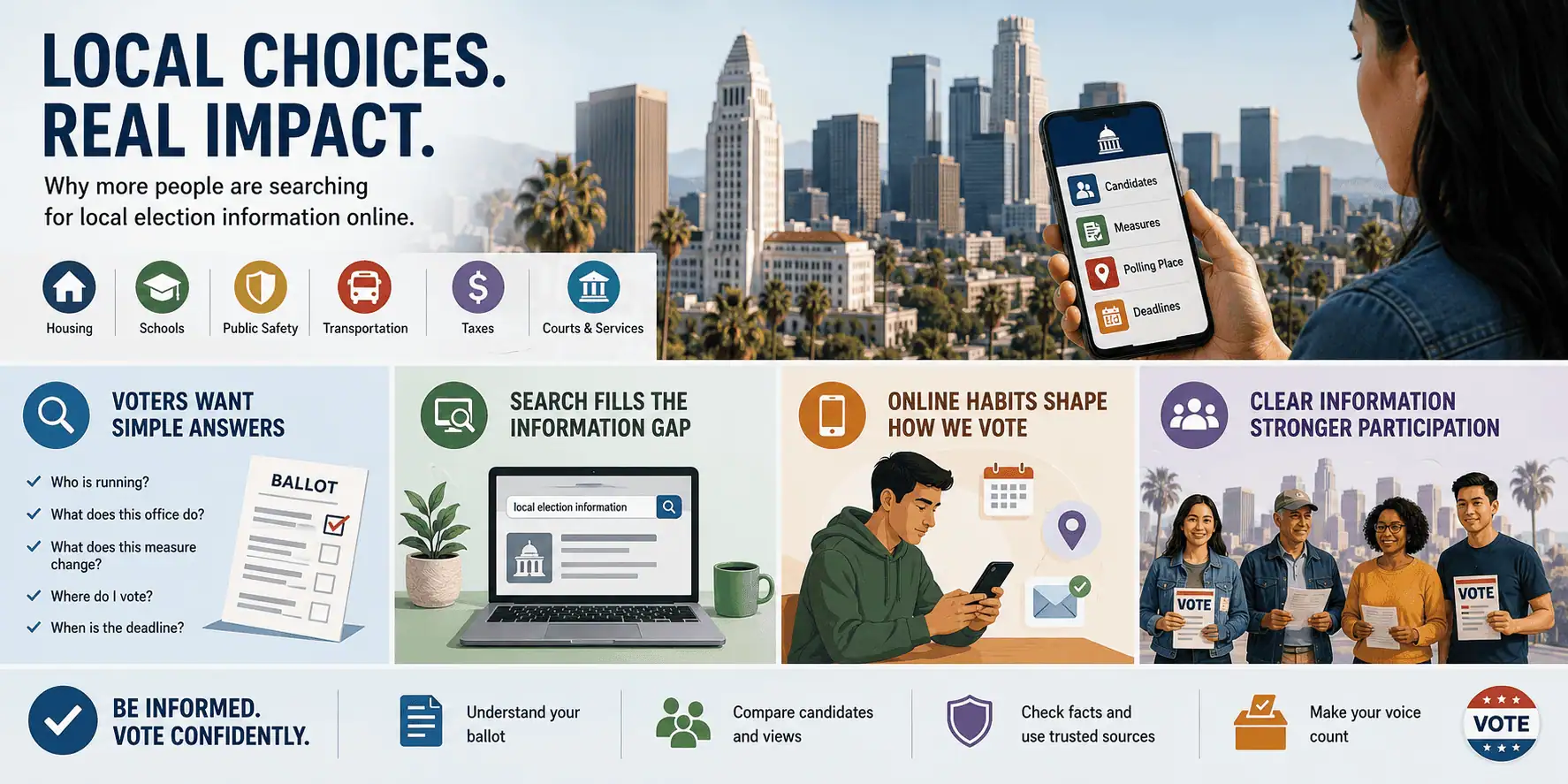
Search can guide each person toward the information that matters most to them. A clear online guide can point voters to deadlines, offices, measures, and trusted sources without requiring them to read every public document from the start.
Trust still matters. Search results can include official election pages, campaign sites, news articles, social media posts, nonprofit guides, and opinion pieces. Each source has a different purpose. Campaign pages are made to persuade. Social posts may miss context. Official election sites are strong for dates and logistics, but they may not explain every race in plain language.
That is why many voters compare sources. They may use official election offices for deadlines and ballot status, then turn to local reporting or civic guides for issue context. This helps voters avoid relying on a single mailer, post, or campaign message.
Online Civic Habits Are Changing How People Vote
Digital election research is becoming a normal part of modern voting. People expect information to be easy to find, updated often, and readable on a phone. They may check a deadline during lunch, review a measure after work, or compare candidates before mailing a ballot.
This habit is useful for local elections that happen outside major national cycles. Off-year elections can be easy to miss, even when the offices carry real power. A voter who searches early may learn about an election they otherwise would not have followed.
Searching early also gives voters more time. By the time a ballot arrives, some people may feel rushed. Looking up races in advance helps voters decide which contests need more attention. One race may be simple to understand, while a complex measure may require extra reading.
Online information can also make local government feel less intimidating. Ballot language can be formal. Public offices can have unclear names. Candidate platforms may be spread across many websites. A helpful search result can turn a confusing process into plain language.
Better digital information does not replace public meetings, local journalism, or official election materials. It supports them. When voters can find reliable answers faster, they are more likely to register, return a ballot, attend a forum, or ask a candidate a sharper question.
Clearer Information Can Lead to Stronger Participation
More people are searching for local election information online since they want to feel ready, not surprised, when they vote. Local ballots can be detailed, and local offices can shape schools, streets, housing, public safety, and business conditions.
The rise in online search shows that voters are not only looking for opinions. They want clarity. They want to know what is on the ballot, what each office controls, what a measure would change, and how to make their vote count.
That is a strong civic habit.
When voters search early and compare reliable sources, they are better prepared to make choices that reflect their priorities. Local democracy works best when people can connect the ballot to the community around them.
Also read: