By using this site, you agree to the Privacy Policy and Terms of Use.
Accept
logo logo
Notification
  • Home
  • Lifestyle
  • Business
  • Health
  • Travel
  • Entertainment
  • Digital Marketing
  • Home Decor
  • Contact us
WebFanDomWebFanDom
Font ResizerAa
Search
  • Quick Access
    • Home
    • Contact Us
    • My Saves
    • My Interests
  • Categories
    • Travel
    • Business
    • Fashion
    • Sports
    • Health

Top Stories

Explore the latest updated news!
Moving to Dubai in 2026 guide for expats covering visas, housing, banking, schools, healthcare, and Dubai lifestyle tips

Moving to Dubai in 2026: What Expats Wish They Knew Before Arriving

1
Best AI Face Swap Tools banner with AI-powered face transformation examples and modern app interface design

Best AI Face Swap Tools of 2026 (Free & No Watermark Options)

1
local elections online

Why More People Are Searching for Local Election Information Online

1

Stay Connected

Find us on socials
248.1KFollowersLike
61.1KFollowersFollow
165KSubscribersSubscribe
Made by ThemeRuby using the Foxiz theme. Powered by WordPress

Home » Differences and similarities between paid and organic search in SEO

Digital Marketing

Differences and similarities between paid and organic search in SEO

Kristen Bowie
Last updated: October 23, 2022 5:38 am
By
Kristen Bowie
Share
paid and organic search
SHARE

Is there any difference between paid and organic search in SEO? The practice of attracting visits via unpaid, editorial, or natural search results in search engines is called “search engine optimization,” or SEO. It aims to improve your website’s ranking in search results pages. Remember that a website will receive more visitors the higher it is ranked on the list.

Contents
  • Position
  • Time
  • Payment
  • ROI
  • Some of the traffic

An SEO agencies focuses in helping companies raise their search engine rankings in search engines. You must understand the differences between paid and organic search, natural search, also referred to as SEO.

There are some differences between paid and organic search, including:

  1. Position

Paid search results are shown at the top of search engine results pages, and organic results are shown below them.

  1. Time

Another crucial distinction between sponsored and organic search is time. Results from paid search can occasionally be received in as short as a few minutes, in contrast to results from organic search, which might take weeks, months, or even years to show. You must therefore play the medium- to long-term game when it comes to organic search.

  1. Payment

As the name suggests, paid search traffic is compensated financially. Based on the cost per click, you get charged for each click (PPC) (CPC). This suggests that you are charged each time a user clicks on your ads.

As a result, as opposed to relying on organic traffic to your website, you buy traffic for your page by paying Google to show your advertisement when a visitor searches for your keyword. Traffic from organic search is free, but it does require a time and resource investment.

  1. ROI

The return on investment, or ROI, may be determined much more easily when employing paid search. Google provides additional keyword data that Google Analytics can gather, which helps explain why.

However, over time, the ROI of paid search may become stagnant or even decline. ROI for organic search is little more challenging to measure, but it often improves over time. Over time, organic search can offer a very good return on investment.

  1. Some of the traffic

When it comes to traffic sharing, 20% to 30% of searchers click on paid results, while 70% to 80% of searchers click on SEO results. The majority of clicks go to organic results as a result.

There are similarities and contrasts between paid and organic search, including:

(a) Keyword research: Users must enter keywords for both sponsored and organic searches on search engines. As a result, you need to research keywords for both paid and organic search.

(b) Landing pages: Both types of searches require landing pages, which you must create. For SEO purposes, the landing page needs to link back to your website. You may use the exact same landing page for sponsored search as you do for organic search, or it may be something entirely different.

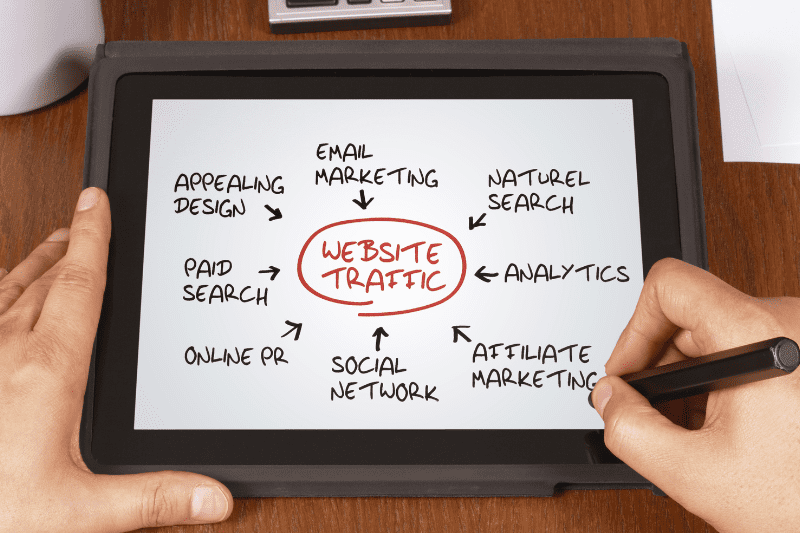
(c) Traffic: Creating traffic is the goal of both sponsored and organic search. Most importantly, both sponsored and organic search traffic includes user intent. In other words, someone who conducts a search or asks a question on Google is acting proactively, making them more likely to act on the information they find.

Conclusion

So, we have now discussed the distinctions and similarities between paid and organic search. Follow our website for more interesting topics.

People also read:

  • Important Social Media KPIs You Should Track at All Costs
  • How to Avoid Wasteful Spending when Digital Marketing?
  • 6 Ingredients for a Successful Digital Marketing Strategy
Share This Article
Facebook Pinterest Whatsapp Whatsapp Copy Link
What do you think?
Love0
Sad0
Happy0
Embarrass0
Sleepy0
Surprise0
Wink0
ByKristen Bowie
Kristen Bowie is a marketing leader, forging the path with data-driven decisions. When she’s not writing for thought leadership and creating sponsorship proposals, she’s hanging out with her two urban dwarf goats, painting, or is out watching a local band.

Recent Posts

  • Moving to Dubai in 2026: What Expats Wish They Knew Before Arriving
  • Best AI Face Swap Tools of 2026 (Free & No Watermark Options)
  • Why More People Are Searching for Local Election Information Online
  • GWM Global All-Scenario Test Drive: Finding Answers for the World, in China
  • Traveling Light in Japan: How Smart Packing Transforms Every Journey

Sign Up for Our Newsletter

Subscribe to our newsletter to get our newest articles instantly!

[mc4wp_form id=”847″]

May 2026
M T W T F S S
 123
45678910
11121314151617
18192021222324
25262728293031
« Apr    

Related Stories

Uncover the stories that related to the post!
LLM SEO vs Traditional SEO
Digital Marketing

LLM SEO vs Traditional SEO

4
Answer Engine Optimization (AEO) → Illustration showing Answer Engine Optimization process and AI-driven search concept
BusinessDigital Marketing

Answer Engine Optimization (AEO): Strategies for AI-Driven Search

5
Googles-MUVERA
Digital MarketingBusiness

Google’s MUVERA – Multi Vector Retrieval Algorithm

8
implement generative search optimization
Digital Marketing

How to Implement Generative Search Optimization in SEO strategy

8
Show More

About US

logo logo

Web Fandom is your go-to platform for tech trends, digital marketing, SEO tips, and lifestyle insights. Discover how-to guides, and the latest updates to boost your online presence and skills.

Quick Links

  • Home
  • Disclaimer
  • Terms of Use
  • Privacy Policy
  • GDPR Cookies
  • Contact us

© 2026 WEBFANDOM.COM | Powered by WordPress.

Welcome Back!

Sign in to your account

Username or Email Address
Password

Lost your password?